
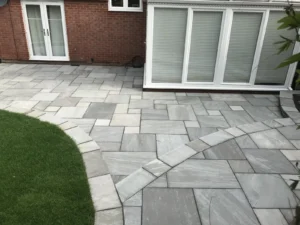

Kandla Grey vs Raj Green Sandstone is one of the most common choices UK homeowners face when planning a patio, because the right paving slabs shape the look of the whole garden. The surface you pick sets the mood of the whole space, and it is the one element you will look at and walk on every day for years.
For UK homeowners, two Indian sandstone options come up again and again: Kandla Grey and Raj Green. Both bring the natural texture and character that make sandstone so popular, yet they create very different results. Kandla Grey feels cool, calm and contemporary. Raj Green feels warm, earthy and traditional.
This guide compares the two in detail, explains how sandstone stacks up against block paving, and helps you decide which slabs for garden use will suit your home best.
Quick Verdict: Kandla Grey or Raj Green?
If you want the short answer, start here:
- Best for modern gardens: Kandla Grey
- Best for traditional and cottage gardens: Raj Green
- Best for a cool, neutral palette: Kandla Grey
- Best for warm, natural tones: Raj Green
- Best with grey render, white walls or anthracite windows: Kandla Grey
- Best with red or brown brick: Raj Green
- Best for subtle, even colour: Kandla Grey
- Best for rich, varied colour: Raj Green
Neither stone is automatically better. The right choice is the one that suits your property, your planting and the atmosphere you want outdoors.
Why Sandstone Is So Popular for UK Patios
Sandstone has been a favourite paving material in British gardens for decades, and it is easy to see why. Natural riven surfaces offer good grip underfoot, the colours look at home in a green landscape, and each slab has its own individual character.
Compared with many man-made alternatives, natural sandstone paving slabs offer:
- Authentic texture: A hand-split, riven face that cannot be perfectly copied.
- Natural colour variation: No two slabs are identical, which gives a patio depth.
- Versatility: Sandstone suits terraces, paths, steps, driveways borders and outdoor kitchens.
- Timeless appeal: The look sits comfortably with both period and contemporary homes.
Because sandstone is a natural product, colour, shade and surface texture will vary between slabs and between batches. That variation is part of the appeal, but it is also the reason physical samples matter so much before you order.
Kandla Grey vs Raj Green Sandstone: Key Differences
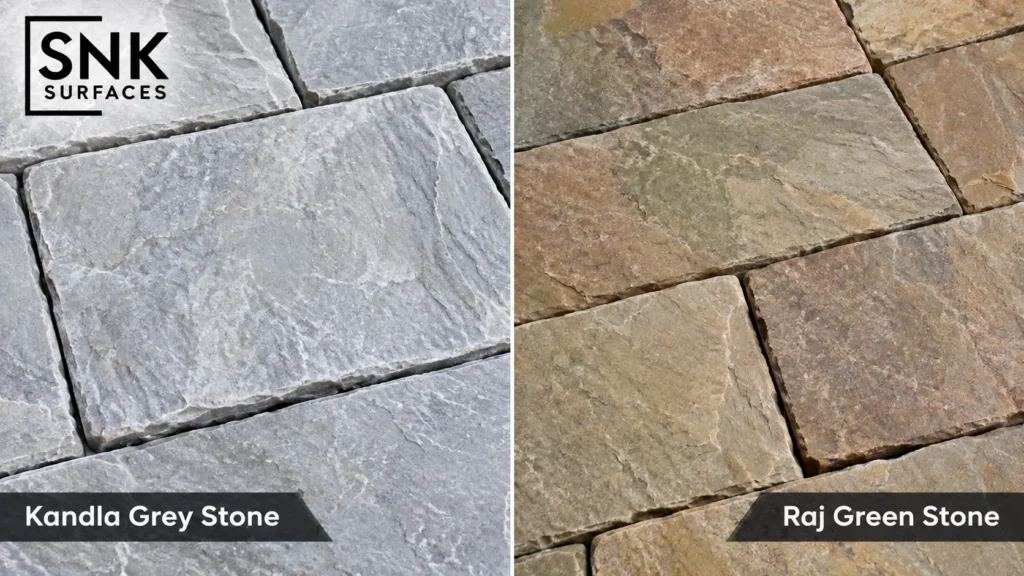
The main difference is colour and the amount of natural variation.
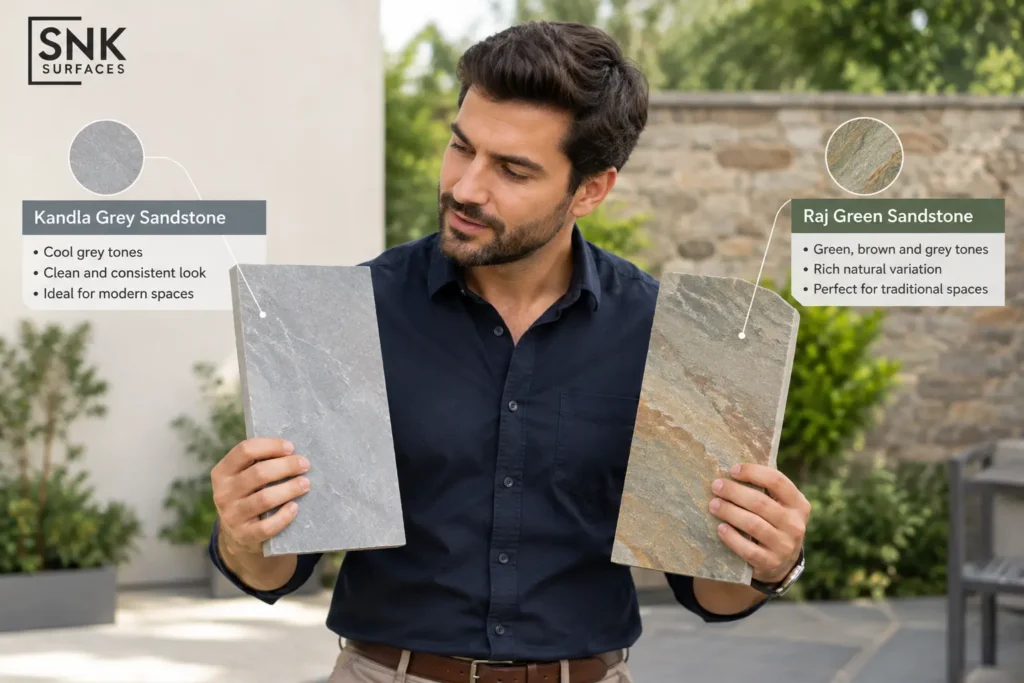
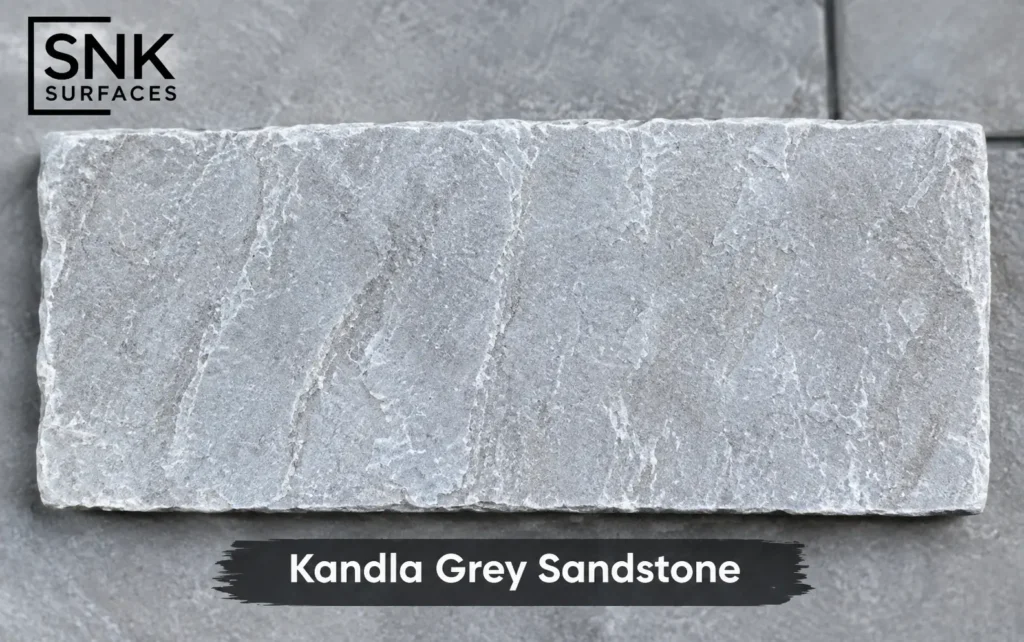
Kandla Grey sandstone features cool grey, silver-grey and subtle earthy tones. The restrained palette gives a clean, understated finish that works well with modern architecture.
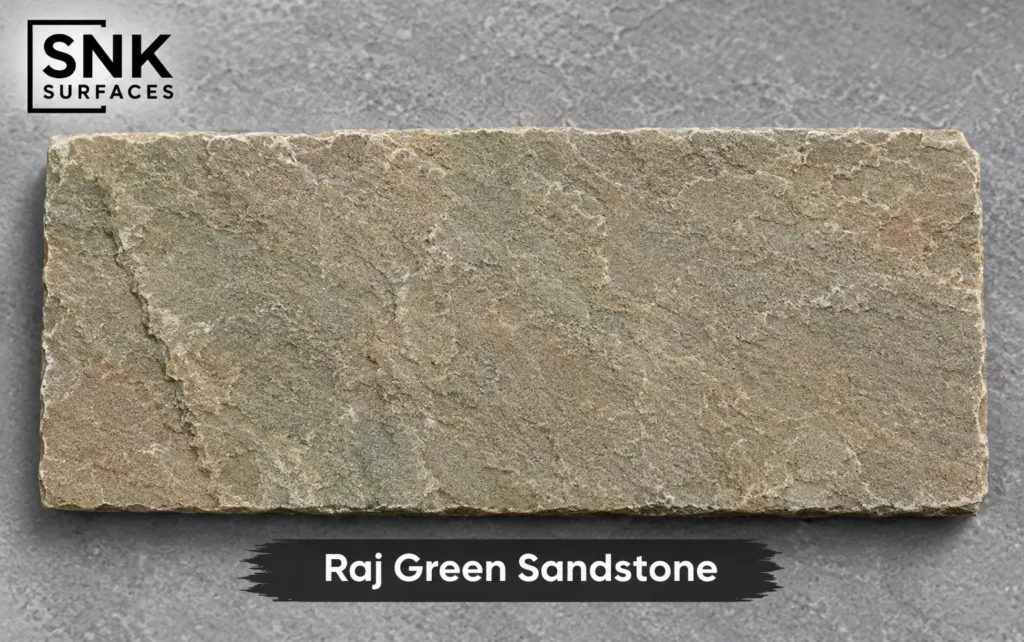
Raj Green sandstone blends green, brown, grey and buff tones, often within a single slab. This gives a warmer, more rustic and more characterful look.
Put simply: Kandla Grey is about calm and consistency, while Raj Green is about warmth and character.
Kandla Grey Sandstone at a Glance
Kandla Grey is a popular choice for homeowners who want a modern patio without moving away from natural stone. Its neutral colouring pairs easily with:
- Grey or white render
- Black or charcoal fencing
- Anthracite window frames and bi-fold doors
- Contemporary garden furniture
- Simple, structured planting schemes
The overall effect is usually calm, light and uncluttered. It also tends to make a smaller garden feel more open, because the colour does not compete with everything else in the space.
Advantages of Kandla Grey
- Modern look: The cool tones complement contemporary homes and landscaping.
- Highly versatile: Grey works with a wide range of fencing, furniture and exterior finishes.
- Clean, even appearance: The more restrained variation looks tidy and considered.
- Easy to coordinate: It sits comfortably alongside black, white, grey and other neutrals.
Possible Drawbacks of Kandla Grey
- The lighter, cooler colour can make some dirt and organic marks more noticeable.
- It can feel slightly too cool next to warm brick, golden stone or heavily planted cottage gardens.
Raj Green Sandstone at a Glance
Raj Green is the more colourful and varied of the two. Its mix of green, brown, grey and buff tones makes it a natural partner for traditional properties. It works well alongside:
- Red and brown brickwork
- Natural stone walls
- Timber pergolas, fences and furniture
- Mature borders and established planting
- Cottage-style and period homes
If you want a patio that looks as though it has always belonged to the house, Raj Green is hard to beat.
Advantages of Raj Green
- Rich natural variation: Individual slabs can show attractive combinations of green, brown, grey and buff.
- Warm appearance: The palette is a strong match for traditional homes.
- Great with brick: It complements red and brown brickwork beautifully.
- Informal charm: It blends easily with lawns, planting and timber.
Possible Drawbacks of Raj Green
- The stronger variation will not appeal to everyone.
- If you prefer a minimalist, consistent finish, Kandla Grey may be a better fit.
- It can be harder to coordinate with a strictly monochrome, ultra-modern garden.
Kandla Grey vs Raj Green: Side-by-Side Comparison
| Factor | Kandla Grey | Raj Green |
|---|---|---|
| Main colour | Grey and silver-grey | Green, brown, grey and buff |
| Overall style | Modern and contemporary | Traditional and rustic |
| Colour variation | Subtle to moderate | Stronger natural variation |
| Best with | Grey render, black and white finishes | Red brick, timber and planting |
| Overall feel | Calm and clean | Warm and characterful |
| Best property type | Modern homes | Traditional and period-style homes |
| Garden style | Contemporary | Cottage and traditional |
| Best for | Neutral colour schemes | Warm, varied colour schemes |
Which Sandstone Suits Your Home Best?
Your house style is the strongest guide when choosing paving slabs. Match each sandstone to your property using the sections below.
Which Sandstone Is Best for a Modern UK Home?
For most modern properties, Kandla Grey is the stronger choice. New-build and contemporary homes often feature grey render, white walls, dark window frames, black fencing and simple landscaping. Kandla Grey slots into that palette naturally and lets the architecture take centre stage.
Raj Green can still work with a modern house, but its warmer and more varied tones create a stronger contrast. If a clean, contemporary patio is your goal, start by requesting Kandla Grey samples.
Which Sandstone Is Best for a Cottage or Period Property?
For traditional or period homes, Raj Green is often the better match. Its warm tones sit comfortably alongside old brick, natural stone walls, timber features and mature planting. It can also stop a newly landscaped garden from feeling too modern or too new.
When choosing slabs for garden use around an older property, think about the existing materials rather than judging the paving on its own. The best paving looks as though it belongs with the house.
Which Looks Better with Red Brick?
Raj Green generally has the advantage with red brick, because its green, brown and buff tones echo the warmer colours found in many brick homes.
That said, Kandla Grey can work too if you want a deliberate modern contrast. Grey paving next to red brick can look crisp and contemporary.
So the decision comes down to the effect you want:
- Want the patio to blend with the brick? Choose Raj Green.
- Want the patio to contrast with the brick? Consider Kandla Grey.
Sandstone vs Block Paving: Which Is Right for Your Garden?
Many homeowners comparing sandstone paving slabs also wonder whether block paving would be a better option. Both can produce a durable, attractive surface, but they suit different jobs and different looks.
Sandstone paving slabs are larger, natural and irregular in character. They are ideal for patios, terraces, garden paths and entertaining areas where you want a relaxed, natural finish.
Block paving uses smaller interlocking units laid in patterns such as herringbone or stretcher bond. It is commonly used on driveways, parking areas and wide paths, where its interlocking structure helps it handle regular vehicle use. The pattern options can look smart and traditional.
| Consideration | Sandstone paving slabs | Block paving |
|---|---|---|
| Look | Natural, riven, varied | Uniform, patterned |
| Typical use | Patios, paths, terraces | Driveways, parking areas, wide paths |
| Laying style | Larger slabs, often random or project patterns | Small units in repeating patterns |
| Character | Organic and individual | Tidy and structured |
| Joints | Fewer, wider joints | Many narrow joints |
For a garden patio focused on relaxing and entertaining, sandstone is usually the more natural choice. For a driveway, block paving often makes more practical sense. Many homes use both: block paving at the front and sandstone slabs at the back.
Whichever you choose, remember that a sound sub-base, correct falls for drainage and careful jointing matter just as much as the surface material itself.
If you are paving a front garden or driveway, read the UK government’s guidance on the permeable surfacing of front gardens. New hard surfaces over 5 square metres may need planning permission unless they are permeable or drain to a lawn or border.
Choosing the Right Slabs for Garden Spaces
The right paving slabs for a garden depend on how you plan to use the space. Think about:
- Use: Dining, seating, a play area, pathways or a hot tub base all place different demands on a surface.
- Size and layout: Larger slabs give a cleaner, more contemporary look. Mixed-size project packs create a more traditional, informal pattern.
- Surroundings: Look at your house, boundaries, planting and furniture together.
- Light: North-facing and shaded gardens look different from sunny ones, and shade can encourage algae.
- Finish: Riven surfaces offer natural texture and grip, while smoother finishes give a more refined look.
Sandstone is a flexible material, so it can be adapted to all of these needs.
Sandstone Maintenance: Kandla Grey vs Raj Green
Neither option is maintenance-free. Outdoor sandstone is exposed to rain, dirt, fallen leaves, algae, moss and regular foot traffic, and the British climate makes routine cleaning a sensible habit.
Colour does play a small role. Kandla Grey’s lighter neutral areas can make some marks more visible, while Raj Green’s natural variation may help disguise everyday dirt. Both still need proper care.
More important than colour are the quality of the stone and the quality of the installation.
Cleaning and General Care
- Sweep regularly to stop leaves and organic debris sitting on the surface.
- When deeper cleaning is needed, use a method and product suitable for natural sandstone.
- Check the supplier’s guidance before using strong chemicals.
Algae, Moss and Dirt
Patios that stay damp or get little sun are more likely to develop algae and moss. Good drainage, regular cleaning and keeping nearby vegetation under control all help reduce the build-up of organic material.
Sealing Indian Sandstone
Sealing is not automatically required for every sandstone patio. Whether it is worthwhile depends on the stone, the installation and the finish you want. If you do decide to seal, choose a product designed for natural sandstone and follow the manufacturer’s instructions.
Do Kandla Grey and Raj Green Change Colour When Wet?
Yes. Like most natural stone, sandstone looks noticeably different when wet. Colours generally deepen and become richer after rain.
This matters when you browse online photos. A patio photographed on a dry, sunny day can look very different after a typical UK shower. If you can, view your sample both dry and wet, and place it beside your brickwork, render and garden furniture.
Will Kandla Grey Show Stains or Efflorescence?
Because of its lighter colour, Kandla Grey can make some marks more noticeable. However, efflorescence is not exclusive to Kandla Grey.
Efflorescence happens when soluble salts travel through paving or masonry and appear as a white deposit on the surface. Moisture, bedding materials, jointing materials and installation methods can all contribute.
If you notice white deposits after installation, do not assume the stone is faulty. Ask your supplier or installer to identify the cause before applying any treatment.
Does Raj Green Sandstone Need Sealing?
Not necessarily. Raj Green does not need sealing simply because it is natural sandstone. Some homeowners seal to help with staining or to enhance the colour, while others prefer to let the stone weather naturally.
If you do seal, use a product suitable for natural sandstone. A breathable sealer may be important depending on the paving and the installation system. Above all, follow the manufacturer’s recommendations.
Which Is Better for the UK Climate?
Colour is not the deciding factor when it comes to British weather. Stone quality, water absorption, frost resistance and installation matter far more.
UK patios deal with rain, persistent damp and spells of freezing temperatures. Poor-quality paving can struggle under repeated wet and cold conditions. When buying sandstone, ask your supplier about the product’s specification and its suitability for outdoor use. A correctly installed patio also needs a properly prepared base and suitable drainage.
Cost and Budget: Kandla Grey vs Raj Green
Sandstone prices vary widely depending on supplier, thickness, finish, pack size, delivery and availability, so comparing only the advertised price per square metre can be misleading.
Your total budget may include:
- Sandstone paving slabs
- Delivery
- Sub-base materials
- Bedding materials
- Jointing compound
- Cutting and wastage
- Labour
- Ground preparation
- Sealing, if required
Installation can be a large part of the final cost, and a cheaper paving product does not always produce a cheaper finished patio. Ask for a full quotation so you can compare the real cost of each option, including any block paving areas if you are planning a driveway at the same time.
How to Choose Between Kandla Grey and Raj Green
Still undecided? Work through these five questions.
- What colour is your house? Grey, white and black exteriors pair well with Kandla Grey. Red brick, cream walls and warm natural materials suit Raj Green.
- Is your garden modern or traditional? Choose Kandla Grey for a clean contemporary design and Raj Green for a traditional or cottage feel.
- How much colour variation do you want? Prefer calm? Start with Kandla Grey. Love natural variation? Look at Raj Green.
- How much upkeep are you comfortable with? Both need sensible care. Focus on cleaning, drainage and installation quality rather than expecting maintenance-free paving.
- Have you compared real samples? This is the most important step. Never choose natural sandstone from an online photo alone. Order samples and view them outside your home.
Choose Kandla Grey If You…
- Have a modern or contemporary property
- Prefer cool, neutral colours
- Like a clean, understated patio
- Have grey or white render
- Want paving that works with black and charcoal finishes
- Prefer more restrained colour variation
Choose Raj Green If You…
- Have a traditional or period property
- Have red or brown brick
- Prefer warmer colours
- Like strong natural variation
- Want a cottage-style garden
- Have mature planting and timber features
Frequently Asked Questions
Is Kandla Grey better than Raj Green sandstone?
Neither is universally better. Kandla Grey suits modern and neutral designs, while Raj Green works best with traditional homes, brick and warmer landscaping.
Is Raj Green sandstone good for a UK patio?
Yes. Raj Green can be an excellent choice when you select good-quality sandstone and have it installed correctly with proper drainage and preparation.
Which is better for a modern garden?
Kandla Grey is usually the better option because its cool, neutral tones complement contemporary materials and landscaping.
Which sandstone looks best with red brick?
Raj Green is the natural choice because its warm tones echo red brick. Kandla Grey works if you want a stronger modern contrast.
Is Kandla Grey difficult to maintain?
No, it needs normal outdoor paving care. Its lighter colour can show some dirt more easily, so regular cleaning helps.
Does sandstone get darker when wet?
Yes. Natural sandstone typically looks darker and more saturated when wet, so view samples in both conditions.
Is sandstone better than block paving?
It depends on the job. Sandstone paving slabs suit patios and garden terraces, while block paving is often chosen for driveways and parking areas.
What are the best slabs for garden patios in the UK?
Good-quality natural sandstone is a popular option thanks to its texture, grip and colour range. Kandla Grey suits modern gardens and Raj Green suits traditional ones.
How long does an Indian sandstone patio last?
A well-chosen, correctly installed patio can give many years of service. Lifespan depends on stone quality, installation, drainage, use and maintenance.
Is Indian sandstone suitable for the UK climate?
Good-quality Indian sandstone can be, provided the product is suitable for outdoor use and is installed correctly.
Final Verdict: Kandla Grey or Raj Green?
The choice between Kandla Grey and Raj Green comes down to your property and personal taste.
Choose Kandla Grey for a cool, modern and versatile patio that works with grey render, black fencing, contemporary furniture and clean landscaping.
Choose Raj Green for warmer, more varied colours that complement red brick, mature planting, timber and traditional homes.
No single sandstone is best for every UK garden. The smartest approach is to compare physical samples before you buy: look at them beside your house, in natural daylight, and both wet and dry. When your paving slabs complement your home rather than just looking good on a product page, you are far more likely to love the finished patio.