
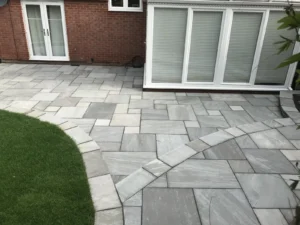

Indian sandstone is available in a wide range of natural colours, including grey, green, brown, buff, cream, pink and red. Each variety has its own colour pattern, texture and character, making it suitable for different architectural and landscaping styles.
The best Indian sandstone colour depends on the appearance you want, the amount of natural variation you prefer and the setting where the stone will be used. Kandla Grey is a popular choice for cool grey schemes, Raj Green combines green and earthy tones, Autumn Brown offers a warmer appearance, and Fossil Mint provides a lighter cream and ivory look with natural fossil details.
This guide explains the main Indian sandstone colours, where the stone comes from, how popular varieties compare and what to consider before selecting a colour for your project.
What Colours Does Indian Sandstone Come In?
Indian sandstone comes in several natural colour families. These include cool greys, green and brown blends, warm buff and cream shades, and more colourful varieties with red, pink or multicoloured patterns.
The final appearance depends on the particular stone, its mineral composition, natural layers, finish and lighting. Natural sandstone is not manufactured to one perfectly uniform colour, so individual pieces can vary in tone and pattern.
Grey Indian Sandstone
Grey Indian sandstone ranges from light silver-grey to deeper grey and blue-grey shades. It works well with contemporary architecture, neutral exterior walls, timber features and modern garden designs.
Kandla Grey sandstone is known for its cool grey appearance, with natural variations between individual pieces. It can complement minimalist outdoor spaces and projects where a restrained colour palette is preferred.
Explore Kandla Grey Sandstone from SNK Surfaces to learn more about this natural stone variety.
Green and Brown Indian Sandstone
Green and brown sandstone combines earthy colours that work naturally with lawns, planting, brickwork and traditional architecture.
Raj Green sandstone typically features a blend of green, grey, brown and muted earthy tones. The balance of these colours varies from piece to piece, giving the surface a distinctive natural character.
Autumn Brown sandstone offers warmer brown and earthy shades, sometimes with grey or reddish details. It can suit traditional landscapes, rustic designs and projects that call for a warmer natural-stone palette.
When comparing these varieties, look at the actual stone samples rather than relying on the colour name alone. The shade and pattern can differ between batches and finishes.
Buff, Cream and Mint Sandstone
Buff, cream and mint sandstone varieties are useful when a lighter natural-stone appearance is required. Depending on the variety, the colour may range from pale ivory and off-white to soft cream, beige or muted buff.
Fossil Mint sandstone is recognised by its light cream, ivory and buff tones, often with visible fossil details. These natural markings give the stone added character without relying on a strong or uniform colour.
Lighter sandstone can help a courtyard, pathway or outdoor space feel visually brighter. However, the final result also depends on sunlight, surrounding materials, the stone’s finish and how the surface is maintained.
Red, Pink and Rainbow Sandstone
Red and pink sandstone varieties provide warmer, more expressive colours. Depending on the stone, shades may include terracotta, rose, reddish-brown, salmon or muted pink.
Rainbow sandstone is known for its contrasting natural bands and patterns. These can combine several earthy shades within the same piece, creating a more decorative appearance than a relatively restrained grey stone.
Such varieties can work well when colour and natural pattern are intended to be visible design features. Always review representative samples to understand how prominent the colour bands will look across a larger area.
Where Indian Sandstone Comes From
India has important sandstone-producing regions, particularly in Rajasthan, as well as sandstone deposits in other states. Geological formations across these areas produce stones with different colours, grain characteristics and natural patterns.
Rajasthan is associated with many established Indian sandstone varieties. Regional names and commercial names may refer to a particular appearance or supply tradition, so a colour name should not automatically be treated as proof of a stone’s exact quarry location.
Why Does Sandstone Have Different Colours?
Sandstone forms from sand-sized mineral grains that become compacted and cemented together over geological time. Its colour is influenced by the mineral composition, cementing materials and geological conditions that affected the rock.
For example, iron-bearing minerals can contribute to red, brown and yellow tones. Differences in mineral content and natural layering can also produce grey, buff, cream and multicoloured appearances.
This is why two sandstone varieties can look very different even when both are natural sedimentary rocks.
Does Every Piece of Indian Sandstone Have the Same Colour?
No. Natural sandstone can vary between individual pieces and production batches. Differences may include the depth of the main colour, visible bands, mineral markings and surface texture.
The name of a variety helps identify its general colour character, but it does not guarantee that every slab will have exactly the same shade.
For a larger project, review several representative pieces together. If colour consistency is important, ask your supplier to explain the expected natural variation and confirm the available batch before placing a full order.
The Major Indian Sandstone Colours Compared
The following comparison summarises the general appearance of popular Indian sandstone varieties. These descriptions are useful for initial selection, but actual colours should always be checked against physical samples.
| Sandstone variety | Typical colour character | General design style |
|---|---|---|
| Kandla Grey | Cool grey and blue-grey tones | Contemporary and minimalist |
| Raj Green | Green, grey, brown and earthy blends | Traditional and natural |
| Autumn Brown | Brown and warm earthy shades | Rustic and heritage-inspired |
| Fossil Mint | Cream, ivory and buff with fossil details | Light, soft and natural |
| Modak | Warm pink, peach or reddish tones, depending on the material | Warm and decorative |
| Rainbow | Multiple earthy colours with visible bands | Expressive and feature-led |
Kandla Grey Sandstone: Cool Grey Tones
Kandla Grey is suitable for projects where a cooler, understated stone colour is preferred. Its grey and blue-grey appearance can complement modern buildings, neutral walls and contemporary outdoor layouts.
The natural surface and colour variation help prevent the finished area from looking like a completely uniform manufactured material.
See Kandla Grey Sandstone for product information.
Raj Green Sandstone: Green and Earthy Blends
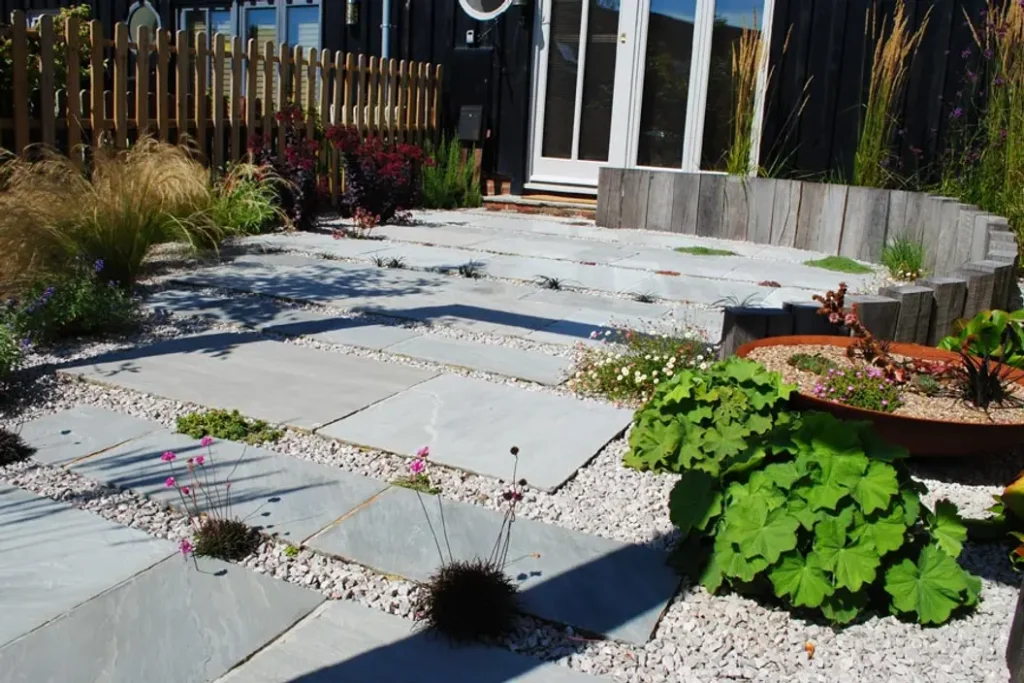
Raj Green offers a more varied colour palette, commonly combining green, brown, grey and muted earthy tones. This blend can work particularly well with planted gardens, traditional brickwork and cottage-inspired settings.
Choose this variety when you want the natural colour differences between individual pieces to contribute to the overall design.
See Raj Green Sandstone for more information.
Autumn Brown Sandstone: Warm Natural Shades
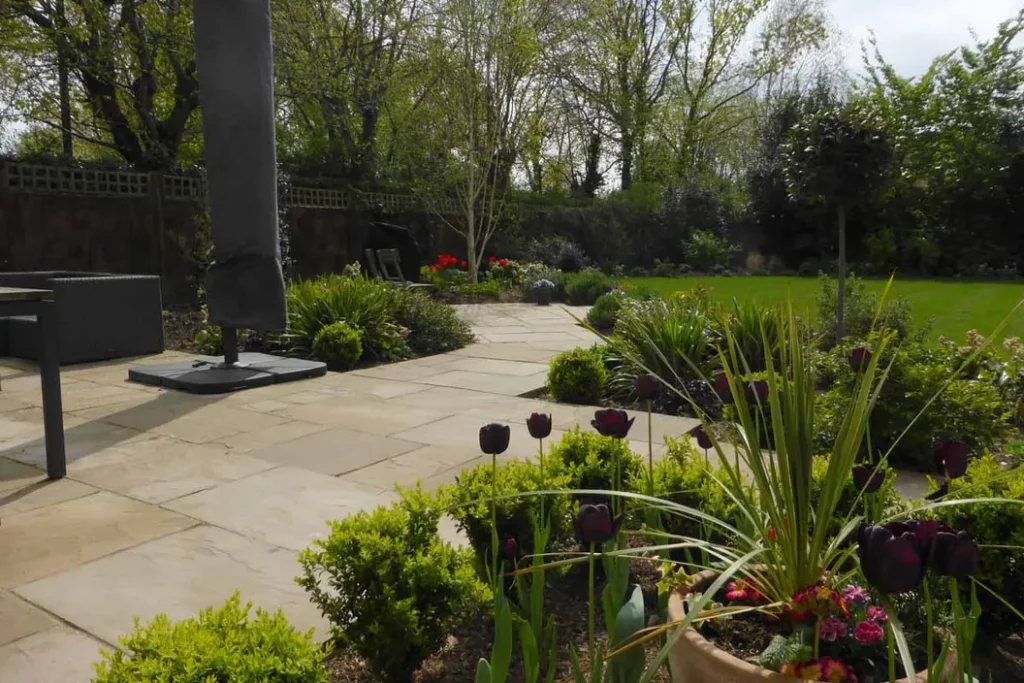
Autumn Brown provides a warmer appearance through its brown and earthy tones, sometimes accompanied by grey or reddish variation. It can complement timber, brick and other materials with warm undertones.
It is worth comparing Autumn Brown with Raj Green in natural daylight if you are deciding between a warmer palette and a more mixed green-brown appearance.
See Autumn Brown Sandstone for more information.
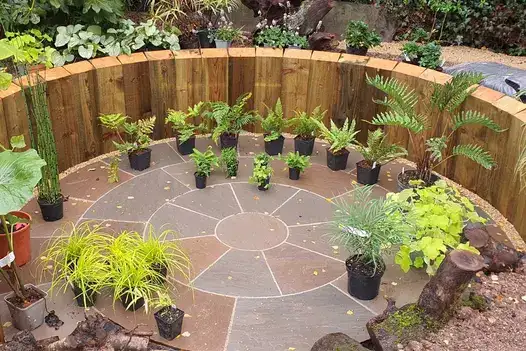
Fossil Mint Sandstone: Cream and Ivory Shades
Fossil Mint is a lighter sandstone variety with cream, ivory and buff tones. Its natural fossil markings create variation across the surface.
It may suit projects where a lighter stone colour is preferred over deep grey or brown. Because the stone is natural, request samples to check the precise shade and fossil pattern available for your project.
See Fossil Mint Sandstone for more information.
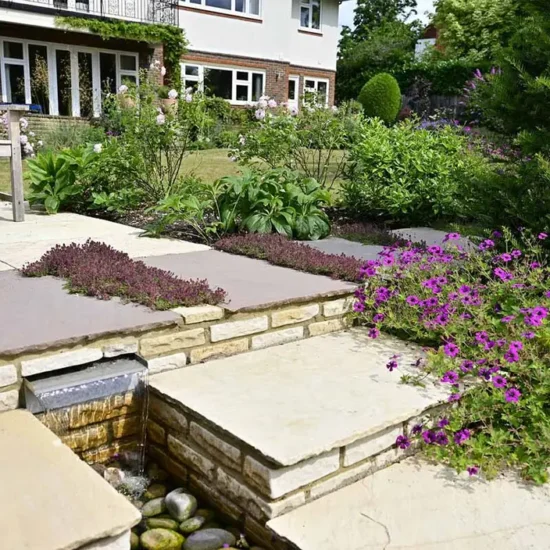
Modak and Rainbow Sandstone: More Expressive Colours
Modak and Rainbow sandstone are options for buyers looking beyond understated grey and green palettes.
Modak is generally associated with warm, pinkish or reddish earthy tones, although the exact appearance depends on the material supplied. Rainbow sandstone is valued for its more pronounced bands and multiple colours.
Both are worth sampling before making a large selection, especially when the visual pattern is an important part of the design.
See Modak Sandstone for more information.
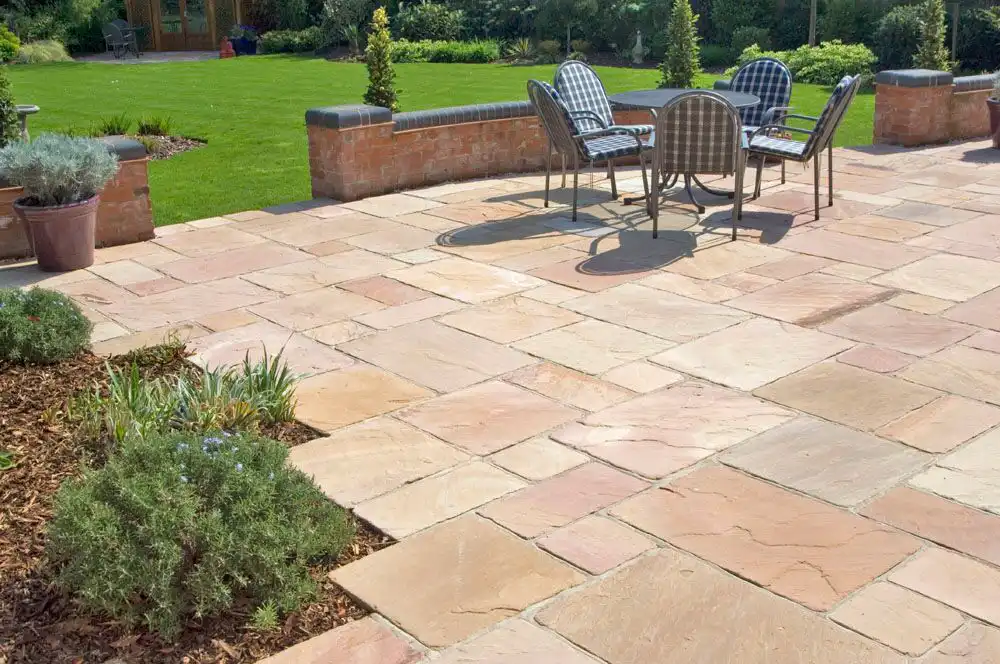
Why Does the Colour of Sandstone Change?
Natural sandstone can appear different depending on where and how it is viewed. A colour shown in a photograph may not match the same stone under different lighting conditions.
Several factors can influence its appearance.
- Natural mineral variation: Mineral content and geological layers affect the stone’s base colour and markings.
- Surface finish: Riven, sawn, honed and other finishes can change how texture and colour are perceived. Only choose a finish offered for the specific product.
- Lighting: Direct sunlight, shade and indoor lighting can make the same stone appear warmer, cooler, lighter or darker.
- Moisture: Wet stone often looks darker than dry stone.
- Batch variation: Different pieces or batches may have different balances of colour and pattern.
For an accurate colour decision, view physical samples in the lighting conditions closest to the intended installation. Where possible, review several pieces together rather than selecting from a single photograph.
Choosing: Three Practical Questions
Before selecting an Indian sandstone colour, ask yourself these three practical questions.
1. How Much Natural Colour Variation Do You Want?
If you prefer a cooler and relatively restrained palette, start by comparing Kandla Grey. If you prefer a blend of earthy colours, look at Raj Green or Autumn Brown.
For a lighter appearance, compare Fossil Mint samples. If you want more noticeable bands and contrasting colours, consider Rainbow sandstone.
Remember that no natural sandstone should be assumed to be perfectly uniform. Ask for representative samples and clarify the expected variation before ordering.
2. Which Colours Suit Your Building and Surroundings?
Consider the colours already present in your project, including walls, brickwork, doors, fencing, landscaping and nearby paving.
- Grey stone can complement contemporary architecture and neutral finishes.
- Green and brown blends can work well with planting and traditional materials.
- Cream and ivory stone can create a lighter visual palette.
- Red, pink and multicoloured varieties can introduce a stronger decorative element.
These are design starting points, not fixed rules. Compare samples alongside the actual materials that will surround the stone.
3. What Maintenance and Project Requirements Matter Most?
Colour is only one part of the selection. Before choosing a variety, confirm that the particular product and finish are suitable for the intended application.
Ask about the stone’s technical information, available thicknesses, finish, expected natural variation, installation requirements and recommended maintenance. Outdoor applications also require consideration of drainage, the installation system and the local climate.
Do not assume that every sandstone variety has the same strength, water absorption or weathering performance. Request product-specific technical information, and follow the supplier’s guidance on cleaning and sealing.
Natural Sandstone Colours vs Porcelain Colours
Natural sandstone and porcelain paving can offer similar broad colour choices, but they are different materials.
Natural sandstone has geological variation in its colour, texture and markings. Each piece can have its own character, which is part of its appeal.
Porcelain paving is manufactured, so its design and colour pattern are produced to a specified appearance. It can be a useful alternative when a more controlled visual finish or a particular maintenance profile is required. Performance still depends on the specific product, finish and installation.
When comparing the two, look beyond colour alone. Consider the intended application, surface characteristics, technical specifications, installation method and long-term care requirements.
How to Choose an Indian Sandstone Colour with Confidence
A colour name is a useful starting point, but it should not be the only factor in your decision.
Start by shortlisting two or three varieties that suit your preferred design. Compare their actual samples in natural daylight and place them beside the building materials and landscaping that will surround them.
For commercial projects and larger orders, ask the supplier to confirm product availability, the expected natural colour variation, available sizes and finishes, and the relevant technical documentation.
SNK Surfaces supplies natural stone and porcelain products from India for domestic and international markets. Buyers, importers, architects, contractors and other project professionals can contact the team to discuss product options and project requirements.
Frequently Asked Questions About Indian Sandstone Colours
What are the main colours of Indian sandstone?
Indian sandstone is available in grey, green, brown, buff, cream, yellow, red, pink and multicoloured varieties. The precise shade depends on the stone’s geological characteristics and the particular material supplied.
Which Indian sandstone colour should I choose?
Choose a colour based on the design, surrounding materials and amount of natural variation you prefer. Kandla Grey suits cooler grey palettes, Raj Green offers green and earthy blends, Autumn Brown provides warmer shades, and Fossil Mint is known for its lighter cream and ivory appearance.
What is the difference between Kandla Grey and Raj Green sandstone?
Kandla Grey is generally associated with cool grey and blue-grey tones. Raj Green usually combines green, brown, grey and other earthy shades. Both have natural variation, so compare representative samples before deciding.
Is Indian sandstone naturally uniform in colour?
No. Natural sandstone can vary in shade, texture, mineral markings and pattern. Variation can occur between individual pieces and batches, so a sample is a better guide than a colour name alone.
Why does sandstone look darker when wet?
Moisture changes the way light interacts with the stone’s surface, so wet sandstone commonly appears darker than when dry. The amount of visible change depends on the particular stone and its surface characteristics.
How can I compare Indian sandstone colours accurately?
Request physical samples of the varieties you are considering. View them in natural daylight, compare several pieces together and place them beside the materials that will surround the finished installation. For larger orders, confirm the available batch and expected colour variation with your supplier.
Does sandstone colour affect its suitability for outdoor use?
Colour alone does not determine suitability. The particular stone’s technical properties, finish, intended application, installation method and local conditions also matter. Ask for product-specific technical information before making a final selection.
Where can I source Indian sandstone for a project?
You can contact a natural-stone supplier that serves your project market and can provide information about available varieties, samples, sizes, finishes and technical specifications. SNK Surfaces supplies natural stone and porcelain products for domestic and international buyers. Contact the team to discuss your requirements.
Final Thoughts
Indian sandstone offers a broad natural colour palette, from cool grey and earthy green-brown blends to light cream, warm pink and multicoloured varieties. The right choice depends on the look you want, the surrounding materials and the practical requirements of your project.
Compare actual samples, understand the expected natural variation and check the product’s technical information before placing an order. These steps will help you choose a sandstone colour that suits both the design and the intended application.