
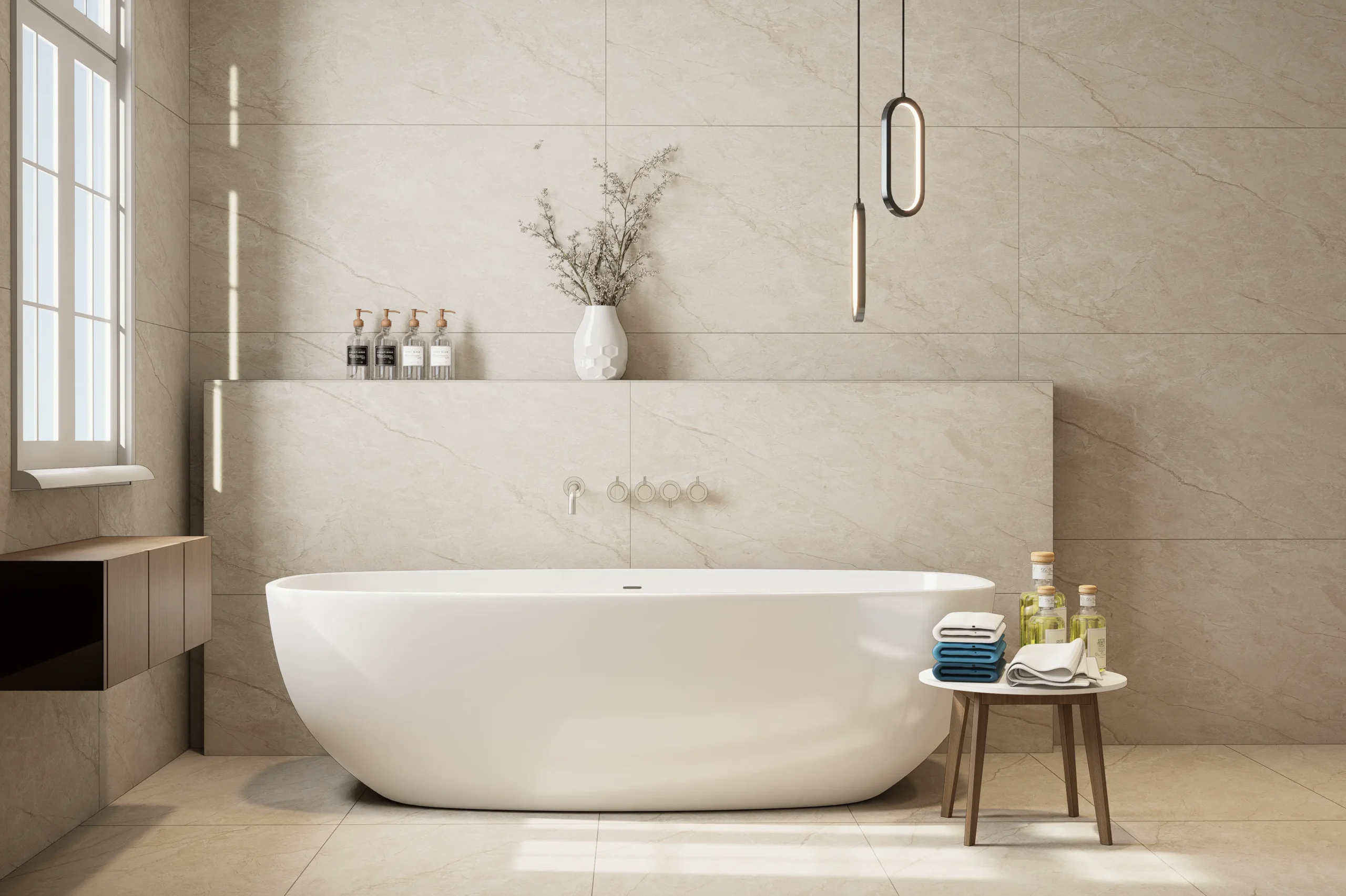

Choosing the right flooring can completely transform your home and outdoor space. Whether you are renovating a patio, upgrading your garden or creating a modern outdoor living area, porcelain floor tiles offer an attractive combination of style, durability and practicality.
Porcelain floor tiles are available in a wide range of colours, textures, sizes and finishes. From natural stone-inspired designs to contemporary grey, elegant white and sophisticated black finishes, there is an option for almost every interior and exterior design.
In the UK, outdoor porcelain floor tiles have become a popular choice for patios, garden pathways, courtyards and terraces. Their low water absorption, easy maintenance and resistance to everyday wear make them a practical flooring solution when you choose the correct outdoor specification.
However, selecting the best porcelain floor tiles involves more than choosing a colour you like. You should also consider thickness, slip resistance, frost resistance, surface texture and installation requirements.
In this guide, we explore ten porcelain floor tile options that can help you create a stylish and functional garden. We also explain their benefits, how to choose the right finish and what to consider before purchasing.
What Are Porcelain Floor Tiles?
Porcelain floor tiles are manufactured from refined clay and other natural minerals. Manufacturers press these materials under high pressure and fire them at high temperatures to produce dense, durable tiles.
This manufacturing process gives porcelain its low water absorption and hard-wearing properties. It also allows manufacturers to create different colours, patterns and textures.
Porcelain floor tiles are available in designs inspired by natural stone, marble, concrete and other materials. This makes them suitable for a wide range of residential and commercial flooring projects.
You can use suitable porcelain floor tiles in:
- Living rooms and bedrooms.
- Kitchens and dining areas.
- Bathrooms and utility rooms.
- Garden patios and terraces.
- Outdoor seating and dining spaces.
- Commercial interiors.
- Courtyards and selected external walkways.
However, not every porcelain floor tile is suitable for every application. Outdoor installations require products with appropriate technical specifications, including suitable slip resistance, frost performance and thickness.
Top 10 Best Porcelain Floor Tiles for UK Gardens
If you are looking for porcelain floor tiles that combine attractive designs with practical outdoor applications, these ten options are worth exploring.
Each collection offers a different colour direction, allowing you to choose a finish that complements your property and garden landscaping.
1. Kandla Grey Porcelain Floor Tiles ( Natural Stone-Inspired Elegance )
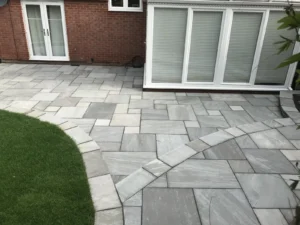
Kandla Grey porcelain floor tiles are an attractive option for homeowners who appreciate the appearance of natural stone. Their grey colour creates a versatile foundation for different garden styles.
Grey porcelain flooring works particularly well with green lawns, natural planting, timber furniture and neutral exterior walls. It can also complement modern architectural designs.
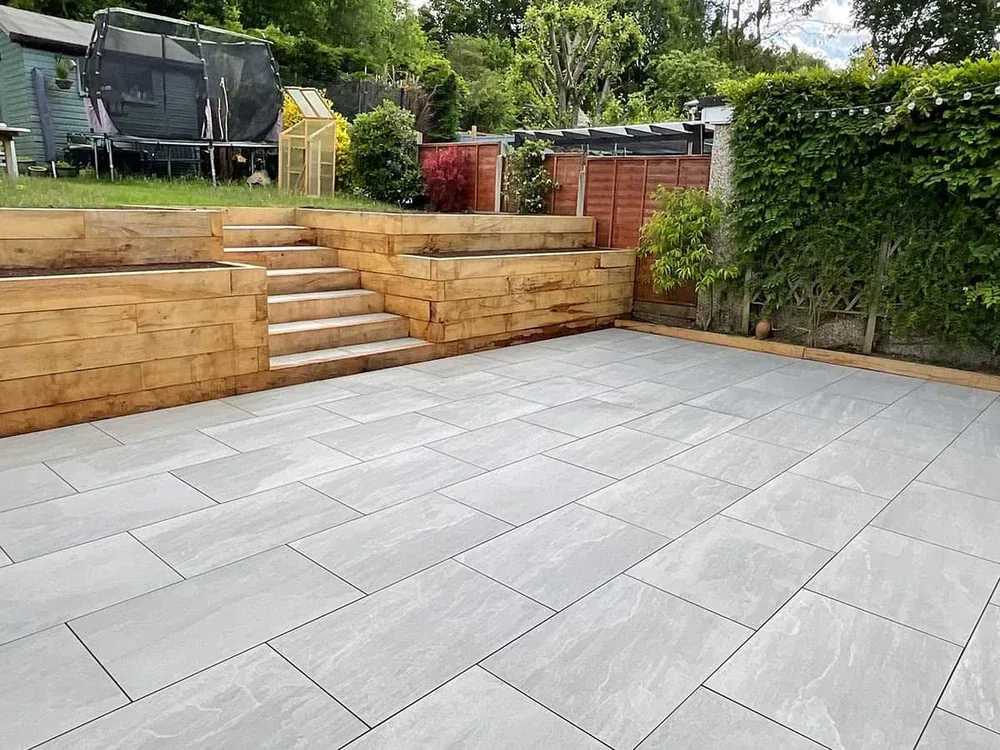
One of the main advantages of grey porcelain floor tiles is their versatility. You can combine them with lighter materials for a balanced appearance or darker accessories for a contemporary contrast.
Key design benefits:
- Natural stone-inspired appearance.
- Versatile grey colour.
- Suitable for contemporary and traditional garden designs.
- Complements natural landscaping materials.
- Creates an attractive finish for outdoor patios.
Ideal applications: Garden patios, outdoor seating areas, terraces and modern landscaping projects.
2. County Anthracite Porcelain Floor Tiles ( Contemporary Dark Grey Flooring )
County Anthracite porcelain floor tiles are a stylish option for people who prefer darker flooring. Their anthracite colour creates a bold and modern appearance.
Dark grey porcelain floor tiles work particularly well with minimalist gardens, modern fencing, black outdoor furniture and contemporary exterior finishes.
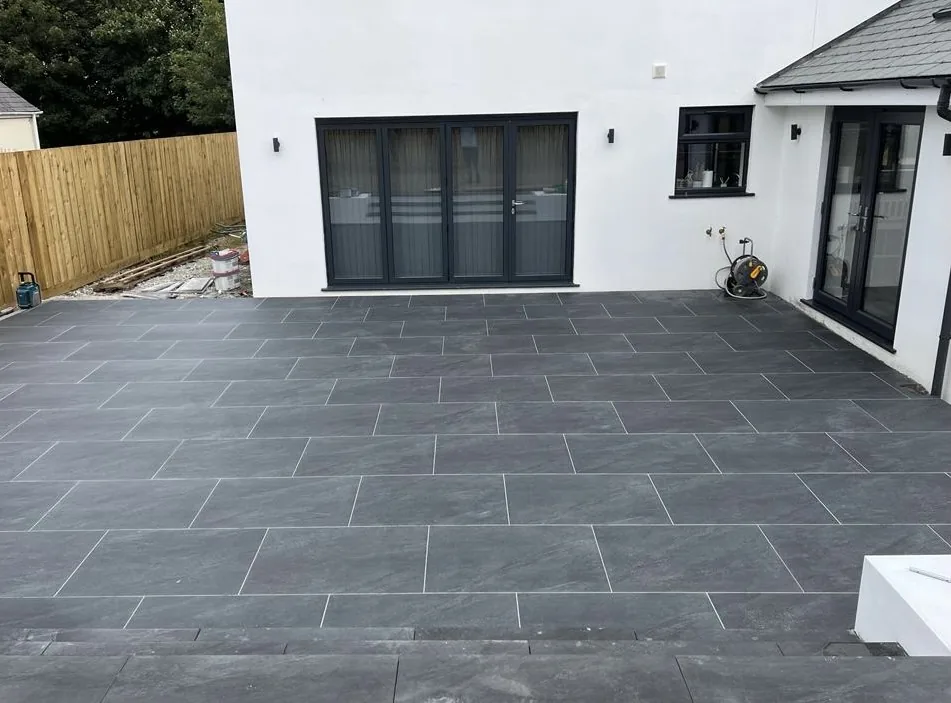
You can also use anthracite paving to create a defined outdoor dining or seating area.
For the best visual balance, combine darker flooring with lighter walls, green planting or contrasting garden accessories.
Key design benefits:
- Modern dark grey appearance.
- Suitable for minimalist garden designs.
- Complements contemporary exterior finishes.
- Creates contrast with lighter landscaping features.
- Provides a sophisticated patio finish.
Ideal applications: Modern patios, garden terraces, outdoor kitchens and contemporary outdoor spaces.
3. Sinai Pastel Porcelain Floor Tiles ( Soft Colours for Elegant Outdoor Spaces )
Sinai Pastel porcelain floor tiles are worth considering if you prefer a softer and more welcoming outdoor appearance.
Pastel-inspired colours can create a relaxed atmosphere in gardens and courtyards. They also complement neutral furniture, natural planting and lighter exterior walls.
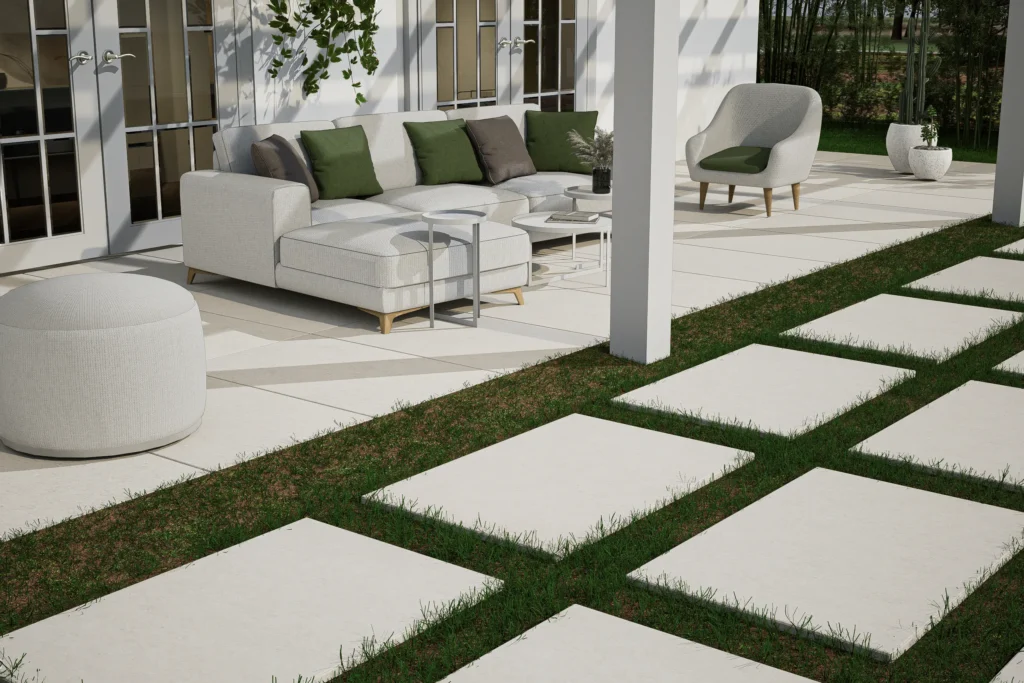
Light and soft-coloured porcelain floor tiles can help smaller outdoor areas feel visually more open. They are a useful choice for homeowners who want a subtle alternative to dark paving.
Key design benefits:
- Soft and elegant colour direction.
- Suitable for relaxed garden designs.
- Complements neutral landscaping materials.
- Creates a lighter outdoor appearance.
- Works with traditional and contemporary settings.
Ideal applications: Garden patios, courtyard spaces, outdoor seating areas and elegant landscaping schemes.
4. Acmite Ice Grey Porcelain Floor Tiles ( A Fresh Modern Flooring Choice )
Acmite Ice Grey porcelain floor tiles offer a cool-toned grey design for contemporary outdoor spaces.
Ice grey flooring can create a clean and fresh appearance, especially when combined with white exterior walls, modern garden furniture and natural greenery.
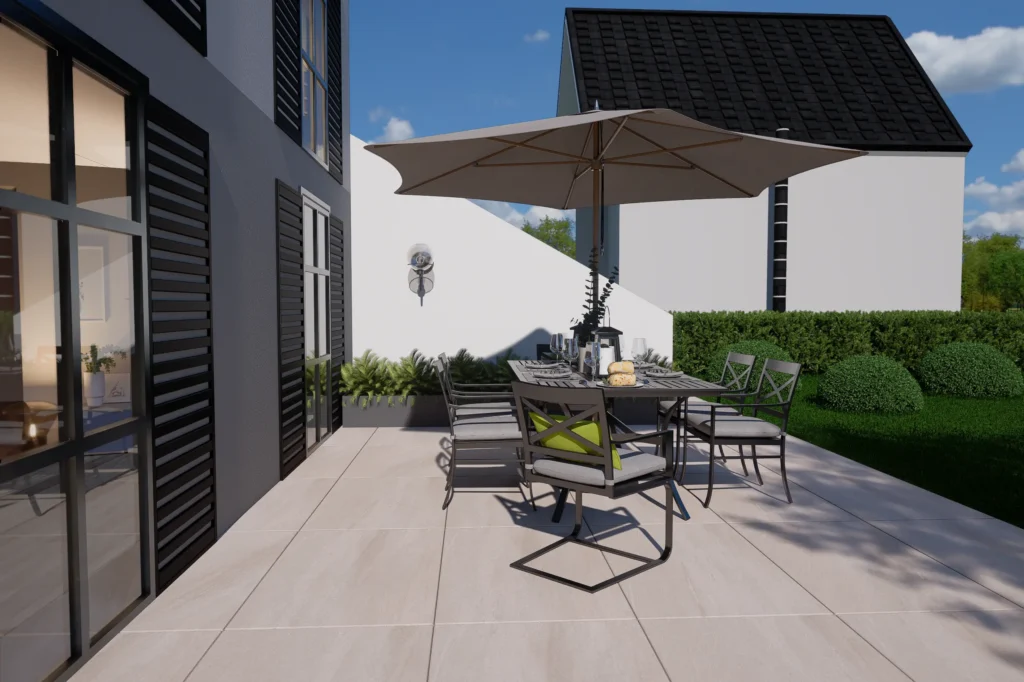
This colour direction is also useful for creating a coordinated appearance between different outdoor areas.
Key design benefits:
- Contemporary cool grey styling.
- Complements white and neutral finishes.
- Creates a clean outdoor appearance.
- Suitable for modern landscaping.
- Works with minimalist garden furniture.
Ideal applications: Contemporary patios, terraces, courtyards and outdoor living areas.
5. Belgium Black Porcelain Floor Tiles ( Bold and Sophisticated Flooring )
Belgium Black porcelain floor tiles are an appealing option for homeowners who prefer dramatic flooring designs.
Black porcelain floor tiles can create a striking contrast against green lawns, colourful flowers and lighter garden features.
They also work well in modern properties with clean architectural lines and darker exterior accessories.
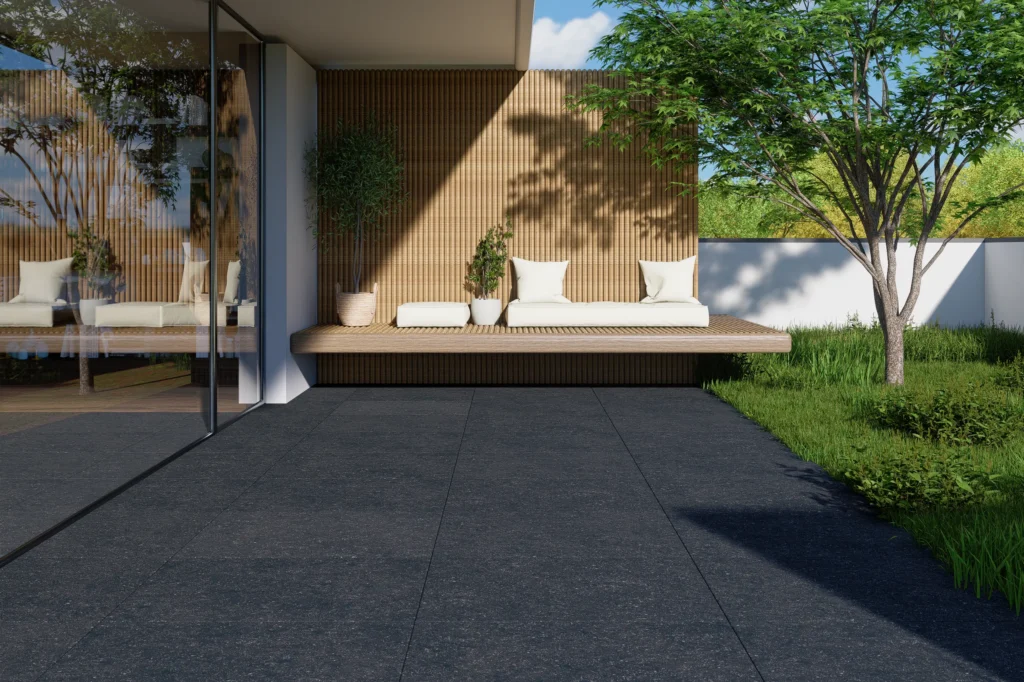
When selecting black outdoor porcelain, consider how much direct sunlight your garden receives. Darker surfaces can become warmer in sunlight.
Key design benefits:
- Bold black appearance.
- Creates strong visual contrast.
- Complements modern architectural designs.
- Works with green planting and lighter features.
- Suitable for sophisticated outdoor layouts.
Ideal applications: Modern patios, outdoor dining areas, garden kitchens and contemporary landscaping.
6. Belgium Nero Porcelain Floor Tiles ( Sophisticated Dark Porcelain Flooring )
Belgium Nero porcelain floor tiles offer another attractive direction for homeowners looking for dark and elegant flooring.
The deep colour styling can create a premium-looking outdoor environment. It also complements contemporary furniture, contrasting walls and carefully planned landscaping.
You can use this style across a complete patio or combine it with lighter materials to create decorative sections.
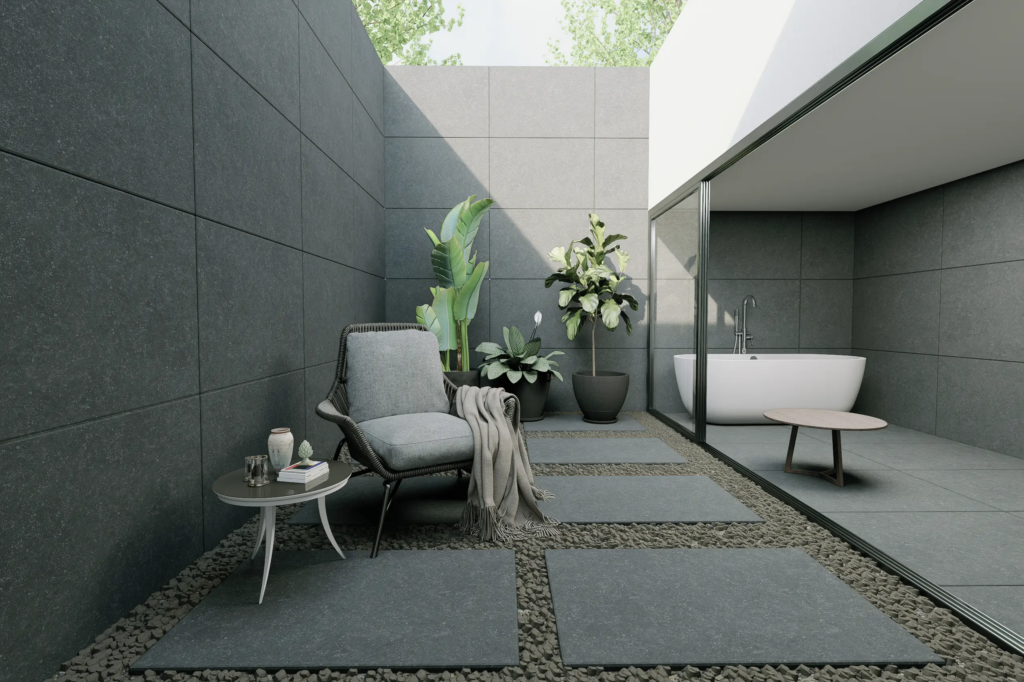
When comparing Belgium Nero with Belgium Black, check physical samples and product specifications. Their actual shades, finishes and technical properties may differ.
Key design benefits:
- Deep dark colour direction.
- Elegant and contemporary appearance.
- Suitable for modern garden designs.
- Complements contrasting exterior materials.
- Creates a strong visual foundation.
Ideal applications: Modern terraces, garden patios, outdoor entertaining spaces and contemporary landscapes.
7. Quartz White Porcelain Floor Tiles ( Bright and Spacious Flooring )
Quartz White porcelain floor tiles are a good option for homeowners who prefer bright and elegant outdoor flooring.
White and light-coloured porcelain tiles can help outdoor spaces feel more open. They also work well with green planting, neutral furniture and modern exterior designs.
A lighter floor can create a fresh atmosphere around garden seating areas and outdoor dining spaces.
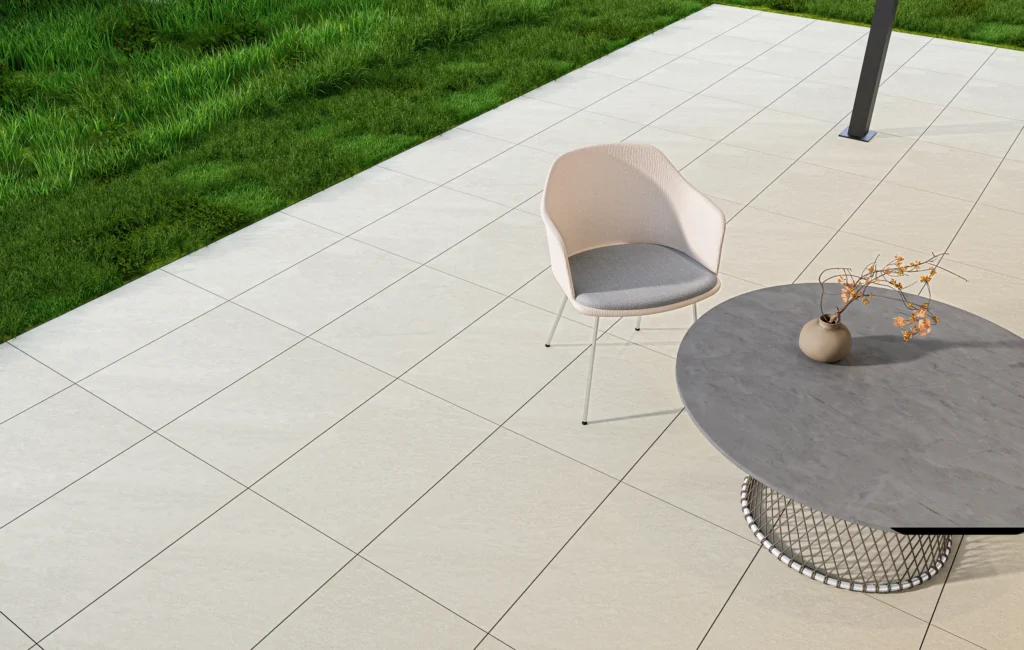
However, visible dirt and leaves may stand out more on lighter surfaces. Regular cleaning will help maintain their appearance.
Key design benefits:
- Bright and elegant appearance.
- Complements modern garden designs.
- Creates a visually open atmosphere.
- Works with natural greenery.
- Suitable for light-coloured landscaping schemes.
Ideal applications: Bright patios, courtyards, outdoor dining spaces and contemporary gardens.
8. Portico Grey Porcelain Floor Tiles ( Versatile Grey Flooring )
Portico Grey porcelain floor tiles offer a versatile colour option for homeowners who want attractive and practical outdoor flooring.
Grey remains a popular choice because it works with a wide range of materials and garden designs.
You can combine grey porcelain tiles with timber details, decorative stone, modern fencing and neutral outdoor furniture.
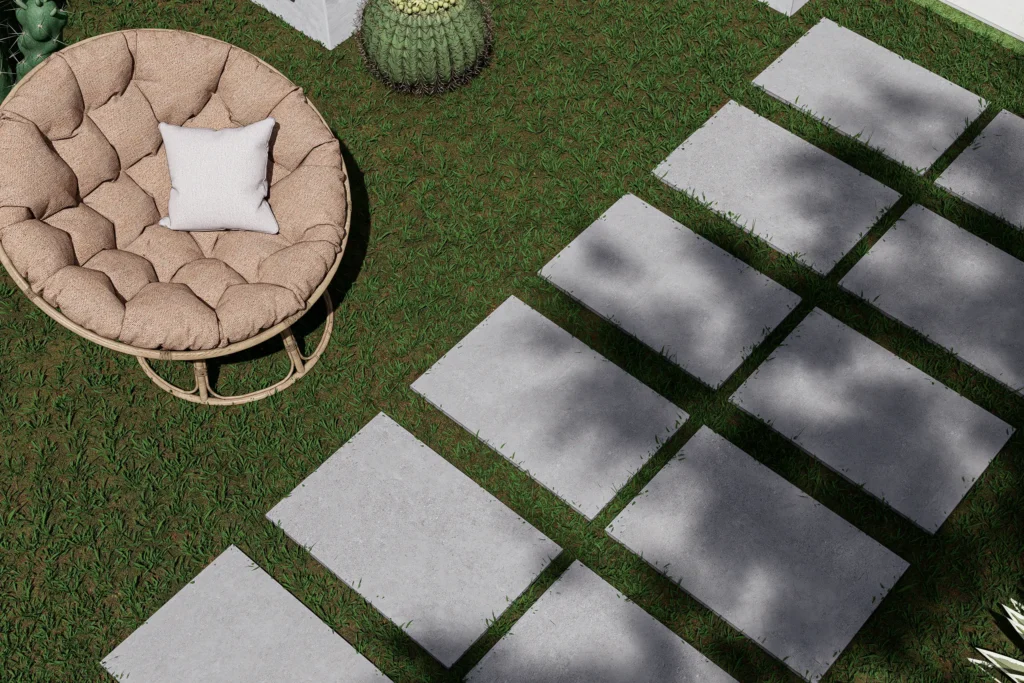
Consider the exact shade and surface finish before purchasing. Lighter and darker grey tones can create very different results.
Key design benefits:
- Versatile grey styling.
- Complements different landscaping materials.
- Suitable for modern and traditional designs.
- Works with neutral outdoor furniture.
- Creates a coordinated patio appearance.
Ideal applications: Garden patios, pathways, terraces and outdoor seating areas.
9. Portico Pearl Porcelain Floor Tiles ( Subtle and Elegant Flooring )
Portico Pearl porcelain floor tiles are an attractive option for people who prefer soft and understated colours.
Pearl-inspired tones can create an elegant appearance without making an outdoor space feel too bright or too dark.
They work well with natural greenery, neutral walls and contemporary garden furniture.
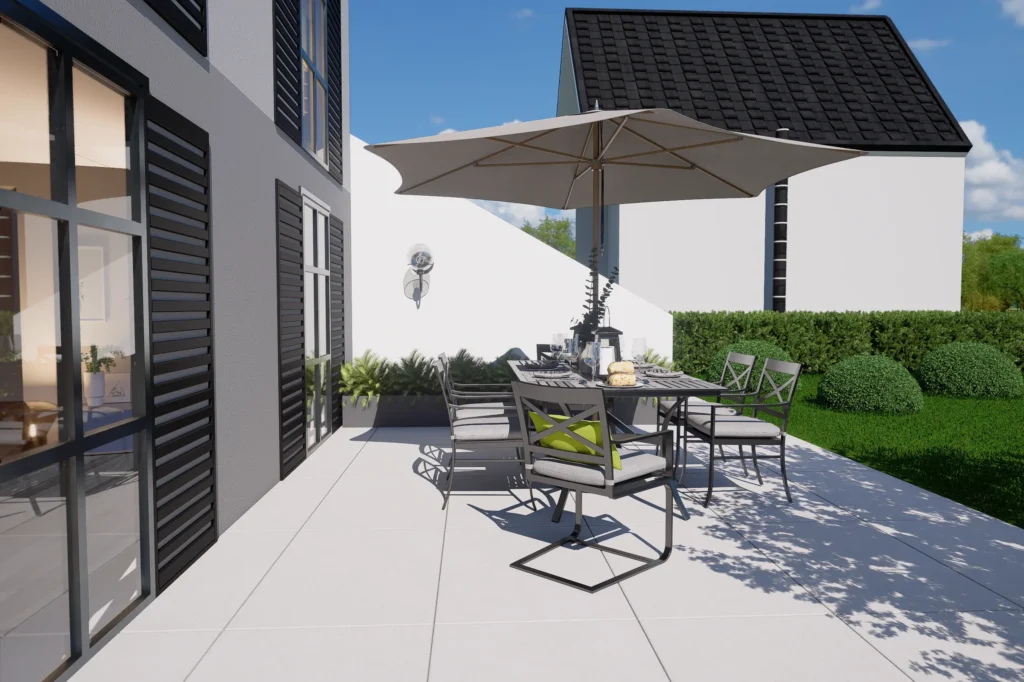
When comparing Portico Pearl with other light-coloured porcelain floor tiles, consider the actual colour, surface texture and pattern variation.
Key design benefits:
- Soft and elegant colour styling.
- Complements neutral garden designs.
- Suitable for contemporary outdoor spaces.
- Creates a balanced visual appearance.
- Works with natural landscaping materials.
Ideal applications: Elegant patios, courtyards, terraces and outdoor seating areas.
10. Portico Taupe Porcelain Floor Tiles ( Warm and Natural Neutral Flooring )
Portico Taupe porcelain floor tiles are an appealing choice for homeowners who prefer warm and natural colour schemes.
Taupe combines elements of grey and brown, creating a versatile neutral appearance.
This colour works particularly well with timber furniture, beige walls, natural planting and decorative stone features.
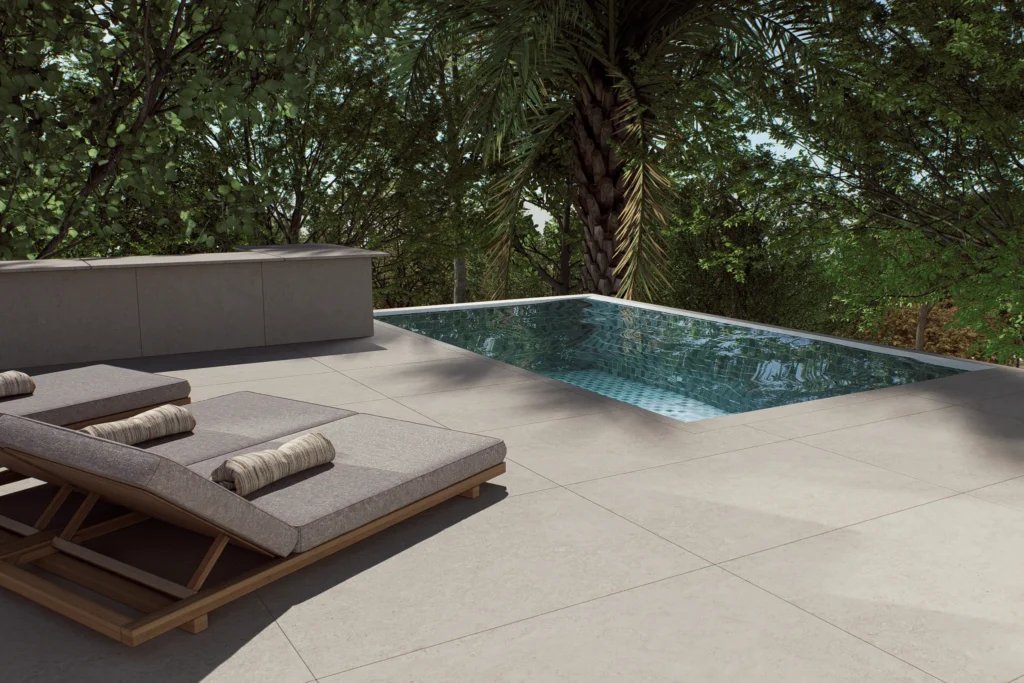
If you want an outdoor floor that feels warmer than traditional grey paving, taupe is worth considering.
Key design benefits:
- Warm neutral colour.
- Complements natural landscaping.
- Works with timber and beige exterior features.
- Suitable for contemporary and traditional gardens.
- Creates a welcoming outdoor atmosphere.
Ideal applications: Natural-style patios, outdoor seating spaces, garden terraces and warm contemporary landscapes.
What Are the Benefits of Porcelain Floor Tiles?
Porcelain floor tiles offer several advantages that make them suitable for different flooring projects. Their performance depends on the product specification, installation and intended application.
1. Excellent Durability
Porcelain tiles are manufactured using high temperatures and pressure. This creates a dense material designed to withstand everyday use.
When you select a suitable product and install it correctly, porcelain flooring can provide long-lasting performance in residential and commercial spaces.
2. Low Water Absorption
One of the main benefits of porcelain is its low water absorption.
This makes it a practical choice for areas exposed to moisture, including kitchens, bathrooms and properly specified outdoor environments.
For external installations, low water absorption also helps reduce the risk of damage associated with freezing water inside the tile.
3. Easy Maintenance
Porcelain floor tiles are generally easy to clean and maintain.
Their dense surface helps prevent everyday dirt and spills from penetrating the material. Regular sweeping and cleaning with suitable products can help preserve their appearance.
4. Wide Range of Designs
Porcelain tiles are available in many different colours, patterns and finishes.
You can choose stone-inspired, marble-inspired, concrete-inspired and contemporary designs to suit your preferred interior or exterior style.
5. Suitable for Different Flooring Applications
Depending on their specifications, porcelain floor tiles can be used in homes, offices, commercial properties and outdoor spaces.
They are particularly useful when you want a consistent design across different areas.
6. Resistant to Everyday Staining
The low porosity of porcelain makes it less susceptible to many common stains than more porous flooring materials.
However, cleaning spills promptly and following the manufacturer’s maintenance guidance will help protect the surface.
7. No Routine Sealing Usually Required
Most standard porcelain tiles do not require routine sealing.
This can reduce ongoing maintenance compared with certain natural stone flooring materials.
Always check whether your specific product or any specialist surface treatment requires additional care.
How to Choose the Best Porcelain Floor Tiles
Choosing the right porcelain floor tiles requires careful consideration of your room, outdoor space, design preferences and practical requirements.
Consider the Location
Start by identifying where you intend to install the tiles.
Indoor flooring and outdoor paving can have different technical requirements. Outdoor products should have appropriate frost performance, slip resistance and thickness.
For bathrooms and kitchens, consider moisture exposure, cleaning requirements and suitable slip performance.
Choose the Right Tile Colour
The colour of your flooring can influence the appearance of the entire space.
- Grey creates a versatile and contemporary look.
- Anthracite provides a bold modern finish.
- Black creates contrast and sophistication.
- White makes spaces feel brighter.
- Pearl offers a soft neutral appearance.
- Taupe introduces warm natural tones.
- Pastel colours create a gentle atmosphere.
Always compare samples with your walls, furniture and lighting.
Check the Surface Finish
The surface finish affects both appearance and performance.
Textured porcelain tiles can offer additional grip for external environments. Smooth finishes may suit certain indoor applications.
Choose the finish according to the location and manufacturer’s performance specifications.
Check the Tile Size
Porcelain floor tiles are available in different sizes and formats.
Large-format tiles can create a more continuous appearance with fewer visible grout joints. Smaller formats may suit compact spaces and decorative layouts.
Consider the room dimensions, cutting requirements and overall design before selecting a format.
Check Thickness and Technical Specifications
Tile thickness should match the intended application.
For UK outdoor paving, 20mm porcelain slabs are a common option for patios and garden paths.
However, thickness alone does not establish suitability. Check the manufacturer’s installation recommendations, load requirements and technical test results.
When comparing porcelain floor tiles, always review the manufacturer’s technical datasheet and relevant testing information. International standards such as ISO 13006:2018 for ceramic tiles provide classifications and requirements relating to ceramic tile characteristics and marking. Checking the relevant product documentation can help you make a more informed purchasing decision.
Compare Samples Before Buying
Product photographs do not always show the exact appearance of a tile.
Lighting, screen settings and photography can affect how colours appear.
Ordering samples helps you compare the colour, texture and finish before committing to a large purchase.
Are Porcelain Floor Tiles Suitable for UK Outdoor Spaces?
Yes. Specially manufactured outdoor porcelain floor tiles are suitable for many UK outdoor applications.
Their low water absorption makes them a practical choice for patios, terraces and garden pathways exposed to changing weather conditions.
However, the correct product specification is essential.
Before choosing outdoor porcelain, check the following factors.
Frost Resistance
UK winters can bring freezing temperatures and frost.
Choose outdoor porcelain tiles with documented frost-resistance performance. Their low water absorption helps reduce the risk of freeze-related damage.
Slip Resistance
Outdoor flooring regularly comes into contact with rain, moisture and organic debris.
Look for suitable slip-resistance information for the exact product and surface finish.
R11 is a commonly used classification for outdoor porcelain paving, but the appropriate requirement depends on the application. Pendulum Test Values are another useful source of slip-performance information.
Do not assume that every textured or outdoor-labelled tile provides the same level of grip.
Drainage
Proper drainage is essential for outdoor porcelain installations.
The patio should have suitable falls and a correctly designed drainage system to prevent standing water.
Correct Installation
Outdoor porcelain requires an appropriate supporting base and compatible bonding materials.
Follow the manufacturer’s installation guidance and use an experienced installer where necessary.
Porcelain Floor Tiles vs Ceramic Floor Tiles: What Is the Difference?
Porcelain and ceramic tiles are both popular flooring materials. However, they have different manufacturing characteristics and performance properties.
| Feature | Porcelain Floor Tiles | Ceramic Floor Tiles |
|---|---|---|
| Manufacturing | Fired at high temperatures | Fired at lower temperatures in many manufacturing processes |
| Density | Generally denser | Generally less dense |
| Water absorption | Very low | Usually higher |
| Durability | Suitable for demanding applications when correctly specified | Suitable for many residential applications |
| Outdoor suitability | Available in specialist outdoor specifications | Requires careful product-specific verification |
| Maintenance | Generally straightforward | Generally straightforward |
| Design options | Wide variety | Wide variety |
| Cost | Depends on product and specification | Depends on product and specification |
Which is better?
Porcelain is often the preferred choice when low water absorption and demanding flooring applications are important.
Ceramic tiles can be a suitable and cost-effective choice for many indoor applications.
Your decision should depend on the installation location, product quality, technical requirements and budget.
Porcelain Floor Tiles vs Natural Stone Flooring
Natural stone and porcelain offer different advantages for residential and commercial projects.
Natural stone has unique colour variations and textures created by geological processes. Porcelain provides a more controlled appearance with a wide range of manufactured designs.
| Feature | Porcelain Floor Tiles | Natural Stone Flooring |
|---|---|---|
| Appearance | Consistent manufactured patterns and finishes | Natural variations and textures |
| Water absorption | Generally very low | Varies by stone |
| Sealing | Usually not required | May require sealing |
| Maintenance | Generally low | Depends on stone type |
| Colour options | Extensive design choices | Natural colour variations |
| Cleaning | Generally easy | Depends on porosity |
| Installation | Requires suitable tile installation methods | Requires stone-specific installation methods |
If you are also considering natural materials for your flooring project, explore our guide to Natural Stone Floor Tiles. It covers popular stone options, including sandstone, limestone, granite and marble, along with their characteristics, maintenance requirements and selection considerations. This will help you compare natural stone and porcelain before choosing the right flooring for your project.
Choose porcelain if you prefer consistent designs and relatively simple maintenance.
Choose natural stone if you appreciate genuine geological variations and distinctive natural textures.
How to Clean and Maintain Porcelain Floor Tiles
Regular maintenance helps preserve the appearance of porcelain flooring.
Although porcelain is relatively easy to maintain, the correct cleaning routine depends on the tile finish and location.
Sweep or Vacuum Regularly
Remove loose dirt, dust and debris using a soft brush or suitable vacuum attachment.
This helps prevent abrasive particles from scratching the surface.
Use a Suitable Cleaning Solution
Clean porcelain floor tiles with water and a suitable mild cleaning product.
Avoid harsh chemicals unless the manufacturer confirms they are compatible with the surface.
Clean Spills Promptly
Although porcelain has low porosity, removing spills quickly helps prevent surface residue and staining from developing.
Remove Outdoor Algae and Dirt
External porcelain paving can collect algae, leaves and organic deposits.
Use an approved outdoor porcelain cleaning solution and follow the manufacturer’s instructions.
Avoid Unnecessary Sealants
Most porcelain tiles do not require sealing.
Do not apply unsuitable sealants or surface treatments, as they can change the finish or leave unwanted residue.
How Much Do Porcelain Floor Tiles Cost in the UK?
The price of porcelain floor tiles in the UK depends on several factors.
These include the tile size, thickness, finish, design, manufacturer and supplier.
Outdoor porcelain paving may also have different pricing from standard indoor porcelain tiles because of its thickness and technical specifications.
When calculating your total project budget, consider:
- The cost of porcelain floor tiles.
- Delivery and transportation.
- Substrate preparation.
- Adhesives and bonding materials.
- Grout and jointing products.
- Installation labour.
- Cutting and wastage.
- Drainage and finishing materials.
Request a complete quotation before purchasing so you can compare the total project cost.
It is also worth checking whether the supplier offers samples, technical datasheets and installation guidance.
Final Thoughts: Choose the Right Porcelain Floor Tiles for Your Space
Porcelain floor tiles offer an attractive combination of design flexibility, durability and practical performance. Their wide choice of colours and finishes makes them suitable for many residential and commercial flooring projects.
For UK gardens, options such as Kandla Grey, County Anthracite, Sinai Pastel, Acmite Ice Grey, Belgium Black, Belgium Nero, Quartz White, Portico Grey, Portico Pearl and Portico Taupe offer different design directions.
Whether you prefer contemporary grey paving, bold black flooring, bright white finishes or warm neutral colours, the right porcelain tiles can help transform your space.
Before purchasing, compare physical samples, check the technical specifications and choose a product designed for your intended application.
With the right selection and professional installation, porcelain floor tiles can provide an attractive and practical flooring solution for years to come.
Frequently Asked Questions About Porcelain Floor Tiles
1. What are porcelain floor tiles?
Porcelain floor tiles are manufactured from refined clay and minerals that are pressed and fired at high temperatures. This process produces dense tiles with low water absorption and a wide choice of colours and finishes.
2. Are porcelain floor tiles suitable for outdoor use?
Yes. Specially manufactured outdoor porcelain tiles are suitable for patios, garden pathways and terraces. Always check frost resistance, slip performance, thickness and installation recommendations.
3. Are porcelain floor tiles waterproof?
Porcelain tiles have very low water absorption, but this does not make a complete tiled floor waterproof. The underlying substrate, grout joints, drainage and waterproofing system also affect water resistance.
4. Are porcelain floor tiles better than ceramic tiles?
Porcelain generally has lower water absorption and greater density than standard ceramic tiles. It is often a better option for demanding applications, but ceramic can be suitable for many indoor floors.
5. Do porcelain floor tiles scratch easily?
Porcelain is generally hard-wearing and resistant to everyday wear. However, it is not completely scratch-proof. Abrasive dirt, unsuitable cleaning equipment and heavy impacts can damage some surfaces.
6. Are porcelain floor tiles slippery?
Slip resistance depends on the tile’s surface finish and test results. Textured outdoor porcelain can provide additional grip, but you should always check the specific product’s slip-resistance information.
7. Do porcelain floor tiles need sealing?
Most porcelain floor tiles do not require routine sealing because of their low porosity. Always follow the manufacturer’s recommendations for your chosen product.
8. What thickness is best for outdoor porcelain floor tiles?
20mm is a common thickness for outdoor porcelain paving in the UK. However, the correct thickness depends on the installation method, intended loading and manufacturer’s instructions.
9. Can porcelain floor tiles be used in bathrooms?
Yes. Suitable porcelain floor tiles are commonly used in bathrooms because they have low water absorption and are available in many finishes. Choose a surface with appropriate slip performance for the intended area.
10. How long do porcelain floor tiles last?
The lifespan depends on the product quality, installation method, usage and maintenance. Properly specified and installed porcelain tiles can provide many years of service.
11. Can porcelain floor tiles be installed over existing tiles?
In some situations, porcelain tiles can be installed over existing flooring. However, the existing surface must be stable, suitable and properly prepared. Seek professional advice before proceeding.
12. Which porcelain floor tiles are best for modern homes?
Grey, anthracite, white and stone-inspired porcelain designs are popular choices for modern homes. The best option depends on your preferred interior style, room size and lighting.